Digital, 35mm, or Super 8? Choosing Your Elopement Photography and Film

The photographs you frame. The way your clothes moved when you walked out of the chapel. The sound of your person saying their vows. These are different pieces of the same day, and choosing your coverage starts with deciding which ones you want to keep.
Digital photography, 35mm film, and Super 8 each bring something different to a Las Vegas elopement. You do not need to understand cameras to choose well. You need to know what each format creates, what you love about it, and what your collection actually includes.
Digital, 35mm, and Super 8: the quick answer
Digital photography creates still images recorded by a digital camera. 35mm film photography creates still images on physical film that is developed and typically scanned for digital delivery. Super 8 creates moving images on motion-picture film. Digital videography is a separate coverage choice for moving images and, when planned and recorded, the sounds of your celebration.
For Lovers Elopements offers 35mm and Super 8 as tailored additions. Start with the photo or video coverage you need, then ask how an analog addition can fit your day. Your proposal should spell out the formats, coverage, audio, and final deliverables.
Digital photography: the still-image story
Think about the photographs you want to live with: the people beside you, your outfits, a wide view of the place, and the small gestures you might not notice happening. Digital photography is a flexible way to build that still-image story across different parts of an elopement.
Digital does not describe one particular editing style. A digital photograph can feel soft, nostalgic, crisp, colorful, or understated. Light, composition, timing, and editing all influence the final image. Choose a photographer whose complete galleries feel right to you, rather than assuming a camera format will create a specific mood.
If photographs are your first priority, start there. Make room for the ceremony, the people who matter, and the portraits you want before adding more locations or formats. A thoughtfully paced gallery can mean more than a rushed list of backdrops.
35mm film: still photographs with an analog process
35mm film is physical photographic film. After exposure, it needs development; scans allow the finished photographs to be viewed and delivered digitally. The film stock, light, exposure, processing, and scanning all contribute to how those images look.
People often love film for its grain, color, and the feeling of a photograph that could have belonged in a family album long before today. Those qualities vary. Film is not automatically faded, blurry, or warm, and a digital file can also be edited to have a nostalgic appearance. Ask to see confirmed 35mm examples so you are choosing the work itself.
As an addition, 35mm can give selected moments another interpretation. That might mean portraits, details, or a few scenes that help describe the atmosphere. A number of rolls is not a guaranteed number of delivered photographs, so ask how the final selection works rather than calculating an image count from the film alone.
Super 8: the memory in motion
Super 8 is motion-picture film. It can hold the movement of a veil, a hand reaching for another hand, the turn before a kiss, or a walk through a place you will always associate with getting married. Its grain and movement are part of why people connect it with home movies and family memories.
There is a physical process between recording and watching it. The film is developed and scanned before it becomes a digital file that can be edited and shared. If you enjoy the craft behind the format, Pro8mm explains its Super 8 processing and scanning service.
A short Super 8 edit and a complete ceremony recording serve different purposes. Ask whether your addition is a standalone reel or integrated into a longer film, which parts of the day it covers, and what the finished length includes. Do not assume that adding Super 8 means every moment will be recorded on it.
If you want to hear your vows, talk about audio
Wanting moving images and wanting a clear recording of your vows are related, but separate, priorities. Tell us if hearing your voices, a reading, or a loved one’s words matters to you. That needs an intentional audio plan.
Do not assume a Super 8 addition includes ceremony audio or a full ceremony edit. Ask how sound will be recorded, where it will appear in the final film, and whether any complete recordings are included. Music in a sample film does not tell you what audio coverage was booked.
How to choose the combination that feels like you
You want a gallery to print and revisit
Prioritize photography coverage and enough time for the people, details, and portraits that matter. If you also love confirmed film examples, ask about adding 35mm within that coverage. You can value photographs deeply without needing every available format.
You want movement and voices
Start by discussing videography and audio. Then decide whether Super 8 adds a feeling you want alongside that story. A digital wedding film and a Super 8 reel can complement each other, but clarify their separate deliverables before booking.
You love both photographs and nostalgic moving film
Ask about photography with a Super 8 addition, or a photo-and-video collection with analog coverage. The right setup depends on your priorities, timeline, and available team. Confirm who is responsible for each format, especially during moments that happen only once.
Give each format room in your timeline
Chapel reservations, travel, changing light, and the people joining you all shape the day. Adding a format works best when it is planned with those realities in mind. Tell us which moments matter most so we can discuss how the coverage fits together.
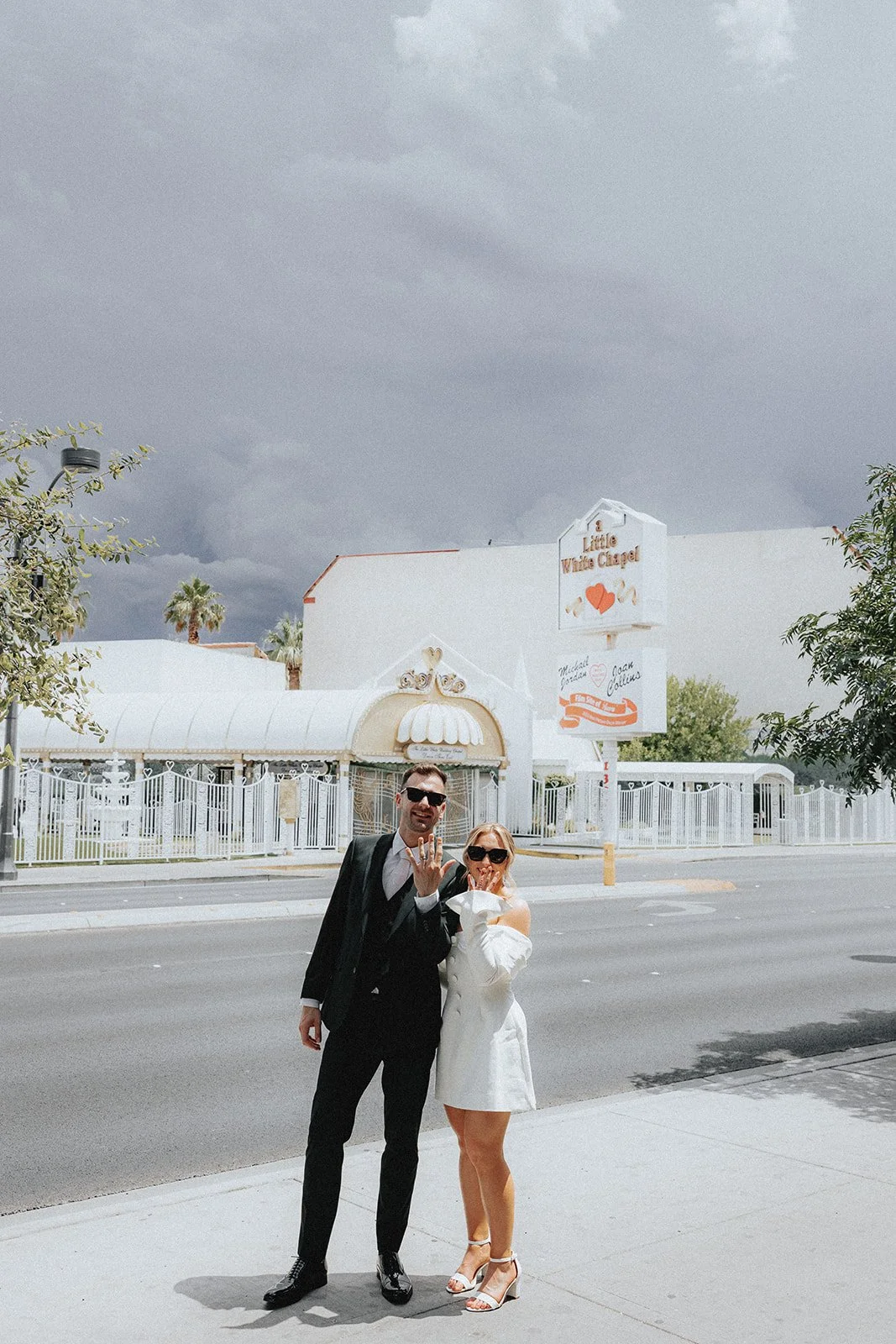
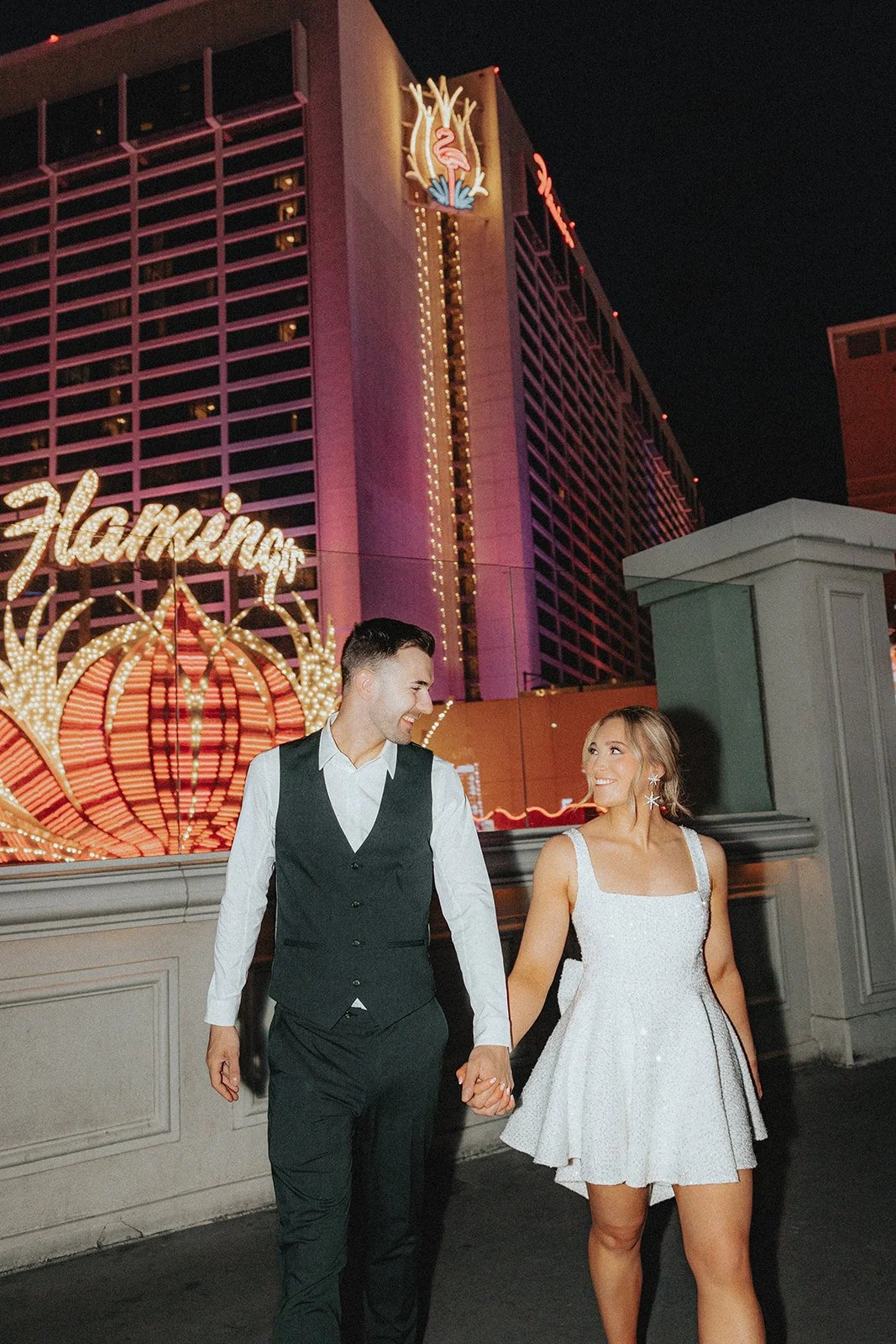
A daylight desert portrait and a neon-lit evening scene create different conditions. Share examples you love in settings similar to yours, and ask what is realistic for your date and locations. Our daylight-to-neon timeline guide can help you think through that flow. If you are still choosing the setting, start with chapel, desert, or downtown.
Questions to ask before adding film
Can we see a complete example? Ask for a confirmed 35mm selection or finished Super 8 film, with an explanation of what was included in that collection.
What will we receive? Clarify the gallery selection, final film length, delivery format, whether analog footage is separate or integrated, and which audio or full-length recordings are included.
How does it fit our coverage? Ask about the team, priority moments, roll allowance, and any extra time needed. Do not assume every person covering your day can record every format simultaneously.
When will it be ready? Film involves processing and scanning as well as curation or editing. Confirm the delivery window in your agreement, including whether analog photographs or Super 8 arrive separately from digital previews.
What is the total investment? Review the current FLE collections and tailored additions, then ask for a proposal that includes the exact combination you want. Format names alone do not define a package.
Start with what you want to remember
You can come to us with a clear wish list, or simply a few images and films you cannot stop thinking about. Tell us whether you picture framed photographs, a film you replay, the sound of your vows, or a little of everything.
Start your For Lovers Elopements inquiry with your date, locations, guest count, and the formats that interest you. We will start with your story and work out the coverage from there.


